Home Cooling
Why Every HVAC Tech I Talked To Said the Same Thing About Mini-Splits Under $500
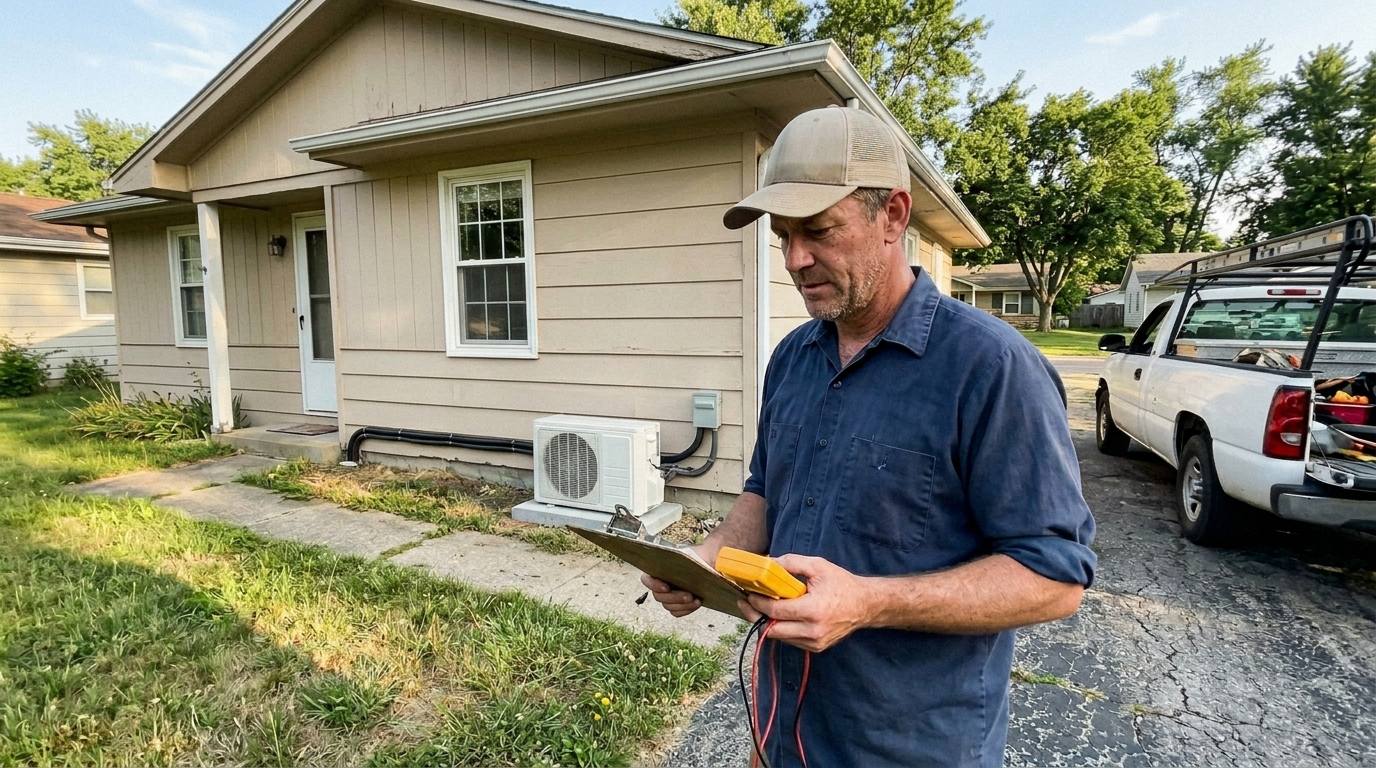
Field-tech check on a homeowner-install mini-split. The cheap gear has gotten genuinely good — and the install practices have not kept up.
I spent 15 years installing commercial cooling systems before I started building consumer hardware. The most common question I get from neighbors right now: "Are these cheap wall-mounted units actually worth it?" The honest answer takes more than a sentence.
So I called six HVAC techs I trust. Three of them have been in the trade more than 20 years. They all told me the same thing, in slightly different words: the hardware is real, the install is the problem.
What changed in this category
Three years ago, a $500 wall-mounted cooling unit was junk. The compressors were poorly matched to the room, the refrigerant lines leaked within a season, the control boards used components that wouldn't survive a humid summer. If you bought one and called me, I'd tell you to take the return.
Two things changed. First, Chinese manufacturers caught up to the precision-machining tolerances required for inverter compressors at residential scale. The compressors in the better $400–$500 units now are, genuinely, the same architecture the major brands use — just last-generation. Second, the control electronics finally crossed a quality threshold. Modern PID logic, proper thermistor placement, capacitors rated for the actual environment. The cheap stuff stopped being cheap in the way it used to be cheap.
What didn't change: the install practices. Most people buy a wall-mount unit, plug it in, and assume they're done. They are not done. The single biggest cause of "this thing isn't working" calls I get from neighbors is bad mounting position relative to the room's airflow geometry.
Where to put it
Every tech I talked to agreed on this: mount high on the wall opposite the room's primary heat source. If your living room has a south-facing window, the unit goes on the north wall, near the ceiling. If your bedroom has a west-facing window with afternoon sun, the unit goes on the east wall.
This sounds obvious. It is also the single most-violated rule. People mount these units on the same wall as the heat source ("but that's where the outlet is") and then complain that the room doesn't get cool. The unit can't cool air it can't reach. The whole point of a wall-mounted system is that the cold air falls — physics, denser air sinks — so the unit needs to be above the room's heat sources, not next to them.
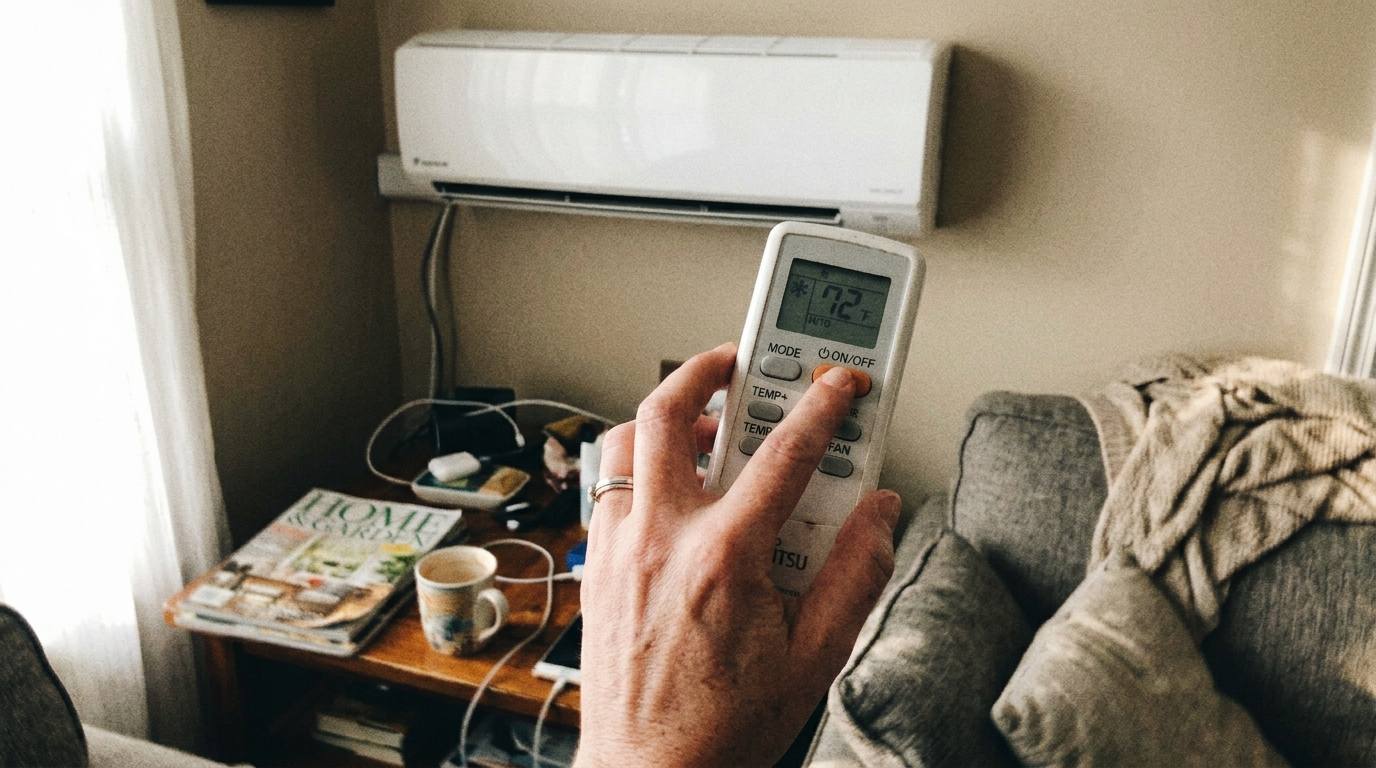
Inverter compressor, real BTU rating, condensate handled internally. Three boxes worth checking before you click buy.
What to look for
Five things every tech I talked to checks before they'll vouch for a cheap unit:
Real BTU rating, not "cools 549 square feet." Square-footage claims are a marketing number. BTUs per hour are a real number. Cross-check by dividing: a 549 sq-ft room needs roughly 12,000 BTU/hr at reasonable insulation. If the listed BTU rating doesn't math out, walk away.
Real condensate handling. A wall-mount unit produces water. Some units evaporate it internally (fine for moderate-humidity climates). Some need a drain hose (a deal-killer if you're a renter). Find out before you mount.
Sound rating in dB at one meter. Not "whisper-quiet." Anything under 45 dB is a real bedroom-friendly unit. 50 dB is loud at 2 a.m. 55 dB is unusable.
Inverter compressor, not a fixed-speed. Inverter units use 30–50% less electricity over a season because they don't cycle on-off constantly. Every modern unit worth buying has one. If the spec sheet doesn't say "inverter," it's old hardware.
Real warranty, real US support. A one-year warranty backed by a US phone number is the bar. Anything less and you're buying a disposable.
"The under-$500 wall-mount category is the most-improved corner of HVAC in the last three years. It's also the corner where the buyer has to know what they're doing. The hardware will hold up. The install practices won't." — Marco T., HVAC technician, 22 years
What's the catch
The catch is that these units do one room well, not a house. If you're heat-pumping your whole 1,800 sq-ft home off a single wall-mounted unit, you're going to be disappointed. The actual use case is: bedroom, home office, garage workshop, or a single floor of a multi-floor place where the main-floor central air can't reach.
For that job — one room, one purpose — the under-$500 wall-mount category is now a real product. Three years ago I would not have written that sentence. Today I have one in my mom's living room and another in my garage. Both work.
The bottom line
If you're trying to cool a single room and a window AC isn't an option (renter, landlord rules, you hate the noise), a quality wall-mount unit under $500 is a real choice now. Read the spec sheet. Check the BTU math. Mount it on the right wall. The hardware will do its job. The rest is on you.