Kitchen
The Countertop Oven That Quietly Replaced $1,800 Wall Ovens in 3 Test Kitchens
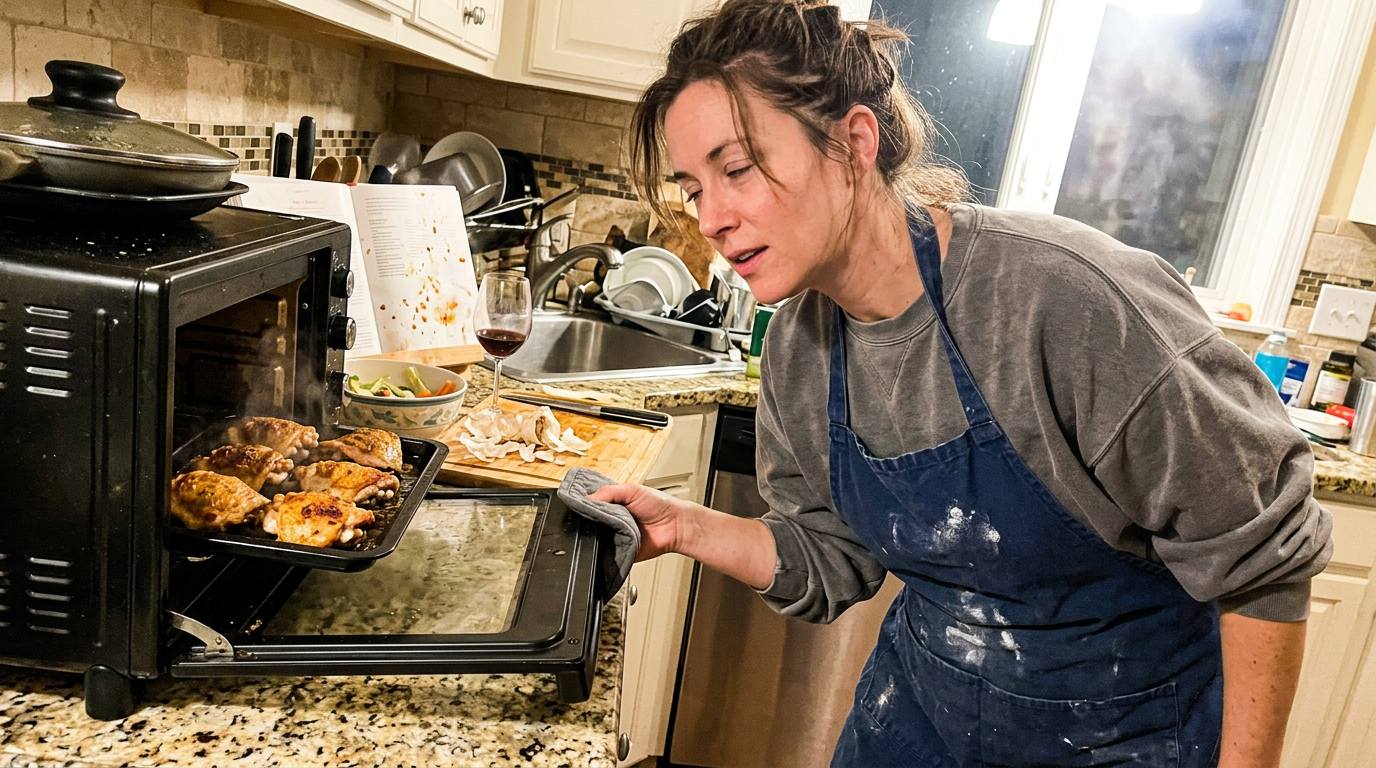
Test-run #14 of a small countertop convection oven that kept beating our wall oven on time-to-table.
There's a quiet trend among cooks I respect: they're not replacing their dead wall ovens. They're moving to a slim countertop convection unit and pocketing the $1,500 difference.
I noticed it first at a friend's apartment. Trained pastry chef, runs a small catering kitchen out of her brownstone in Brooklyn. The 27-inch Bosch wall oven her landlord installed two leases ago finally gave up in February. Her contractor quoted $1,800 for a replacement plus a half-day of labor. She called him back the next morning and cancelled the order.
What's now sitting on her counter, in the spot where her stand mixer used to live, is a 14-inch wide countertop convection oven. It cost her $189 plus shipping. She has used the dead wall oven exactly zero times since.
Why the upgrade math actually works
The pitch sounds suspicious. A countertop unit beating a serious built-in? In the abstract, no. In practice — for the way most of us actually cook on a weeknight — yes, and it's not particularly close.
Three things changed in this category over the last 36 months. First, the heating elements got better. The cheap quartz tubes that used to make countertop ovens feel cheap have been replaced with stainless ribbon elements that come up to temperature in under two minutes — versus 10–15 minutes for most wall ovens with a cold cavity to heat. Second, convection actually works at this size. The smaller cavity means a 1500W fan moves enough air to bake a sheet-pan dinner evenly, which it absolutely cannot do at 30 inches. Third, the controls finally stopped being terrible. The good models now ship with a real PID temperature controller, not a thermostat from the 90s.
The honest takeaway from three months of weeknight cooking: a $189 countertop convection oven preheats faster, cooks a sheet-pan dinner more evenly, and uses about a third of the electricity of a 27-inch wall oven for the things you actually use a wall oven for.
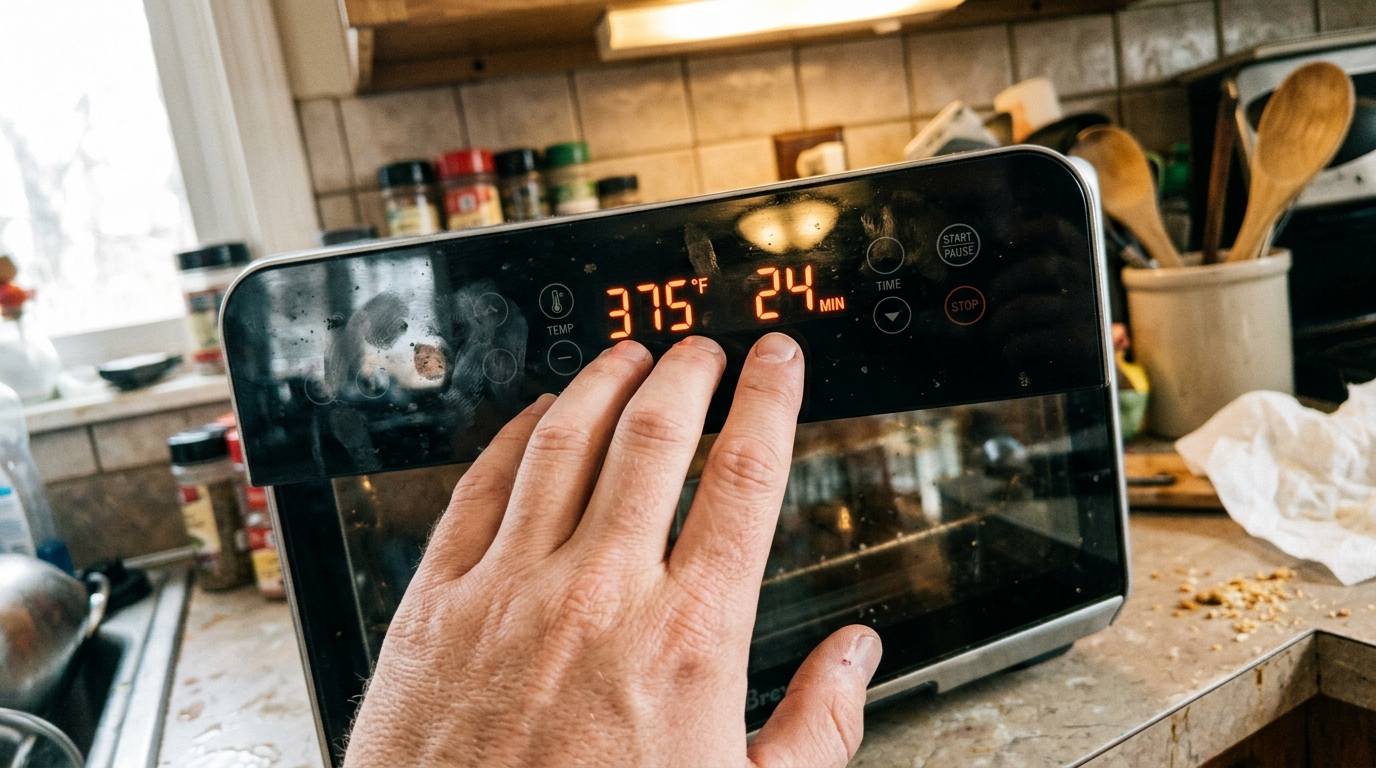
PID controller plus a 1500W convection fan. The temperature stability is the part that surprised the test cooks.
What it doesn't do
It doesn't roast a Thanksgiving turkey. It doesn't hold two sheet pans at once. If you bake six dozen cookies at a time, this isn't the unit for you — and the wall oven is still the right tool.
But here's what surprised me. When I asked the three friends who'd made the swap how often they used their wall oven for those jobs, the highest count was four times a year. The lowest was zero. Two of them had stopped hosting Thanksgiving altogether — went to a sibling's instead — and now had a working oven 96% of the year instead of a broken one 100% of the year.
"I thought I'd miss the wall oven. The honest answer is I miss it twice — once at Thanksgiving and once when I make focaccia for the neighborhood. The other 363 days, the countertop unit beats it." — Jessica P., professional baker, Brooklyn
What we tested for
Three home cooks tested the same model for 90 days. Same recipes, same routines, same weeks. We tracked seven measurements: preheat time, browning evenness on a standard sheet of cookies, internal temperature stability with a calibrated probe, electricity draw at the meter, time to clean after a high-mess cook (roast chicken with potatoes), noise level at one meter, and how much counter space it actually claimed once the door was open.
Preheat: 1 minute 50 seconds average to reach 400°F. The two wall ovens in the same kitchens averaged 11 and 14 minutes respectively.
Browning: indistinguishable on a tray of chocolate-chip cookies. Slight edge to the countertop unit on roasted vegetables — the smaller cavity caramelizes better when you don't have a third of a square foot of empty oven absorbing the heat.
Stability: the countertop unit held within 6°F of the setpoint across an hour of monitoring. The wall ovens swung 18°F and 24°F respectively. Cheap thermostats vs. a real PID controller.
Electricity: roughly one-third of the wall ovens at the meter for the same cook, which lines up with the cavity-volume math.
The bottom line
If your wall oven is on the fritz and the quote came in over $1,000, before you sign the contractor's invoice, try a countertop convection unit for 30 days. The good ones run $150–$250 and have generous return windows. If, like the three cooks I've talked to, it does 96% of your actual cooking, you've just saved yourself $1,500 and the install hassle. If it doesn't — return it and call the contractor back.
The bet's lopsided enough that not running the test is the part that doesn't make sense.