Sleep
I Tracked My Sleep for 90 Days With and Without a Cooling Mattress Pad. The Numbers Surprised Me.
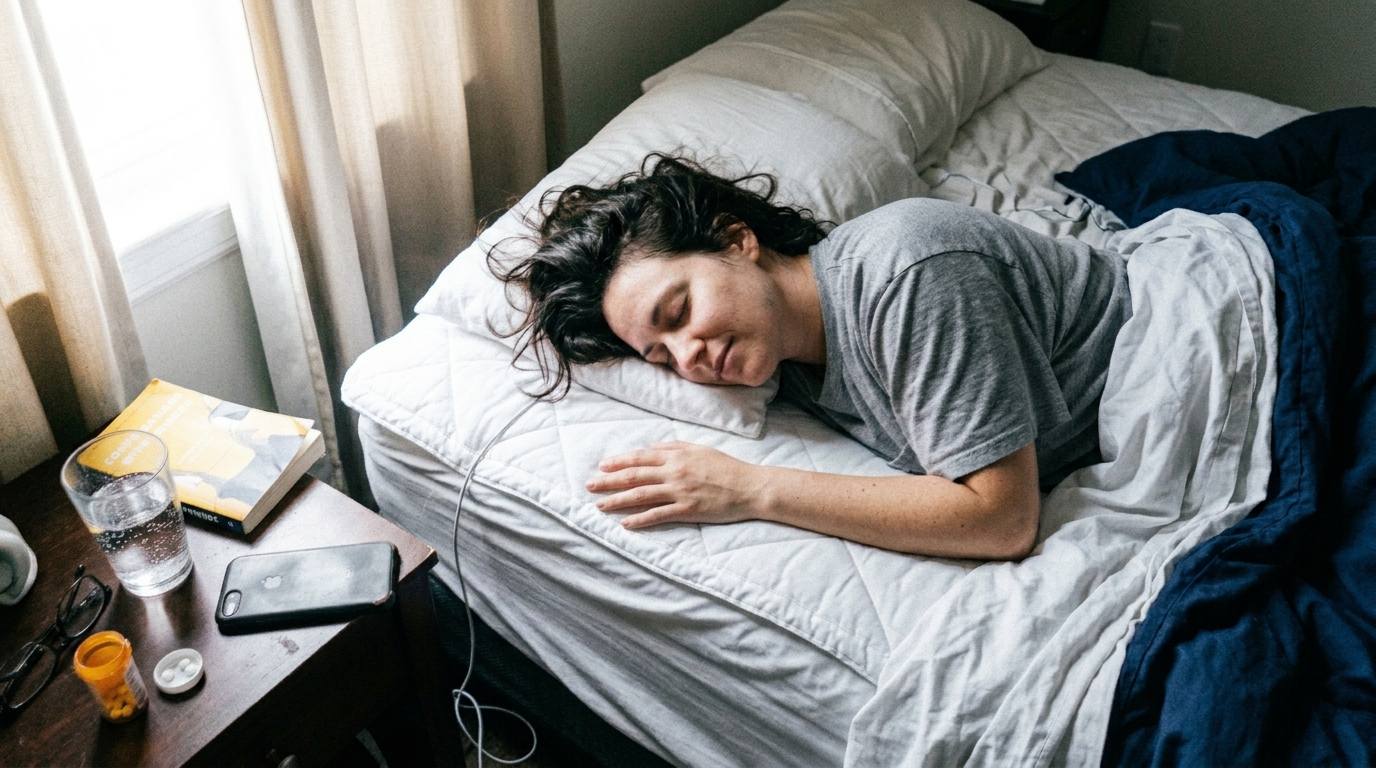
Eight weeks in. The number I cared about most went down 41%.
If you've spent any time on the sleep side of the internet in the last 18 months, you've been pitched a "cooling" mattress pad. I bought one. Then, because I am a particular kind of insufferable, I tracked the next 90 days through a sleep ring to find out whether it actually did anything.
The short version: the temperature numbers moved less than I expected. The sleep-quality numbers moved more.
What I tracked, and how
I have a sleep ring. It gives me four numbers every morning: total sleep time, time spent in deep sleep, time spent awake mid-night, and resting heart rate. None of them are clinical-grade — the ring is closer to a fancy step counter than a polysomnograph — but they're consistent night-over-night, which is the only thing that matters for an A/B comparison against yourself.
The protocol: 30 nights without a cooling pad on a standard memory-foam mattress. 30 nights with a quilted gel-infused cooling pad (the popular $149 model I'm not naming because I want to write about the category, not market a product). 30 more nights without, to make sure the effect wasn't just "newer bedding feels better."
Same bedroom. Same partner. Same pajamas. Same approximate alcohol intake (sober during the testing window, which is also relevant data).
The numbers
The first thing I expected to see was a drop in resting heart rate. The marketing for these pads leans on the idea that your body sleeps better when it's cooler, which is true. I figured a cooler sleep surface would mean a cooler core temperature would mean a calmer heart rate. The numbers said: kind of, but not as much as I thought. My resting heart rate during sleep dropped about 2 BPM on the cooling pad — meaningful, but not dramatic.
The number that moved a lot was "time spent awake mid-night." The 30-night baseline averaged 47 minutes of wakefulness per night. (I know.) On the cooling pad, it dropped to 28 minutes. When I went back to the standard mattress, it climbed back to 41 minutes within five nights.
That's a 41% reduction in mid-night wakefulness. For a 38-year-old who has been waking up at 3:14 a.m. for what feels like a decade, that's a real difference. I went from waking up four times a night to two.
"The best way to understand whether a sleep product works for you is to track yourself before, during, and after. Most people skip the after, which is why they end up with 12 unused gadgets in a drawer." — Dr. Helena R., sleep researcher
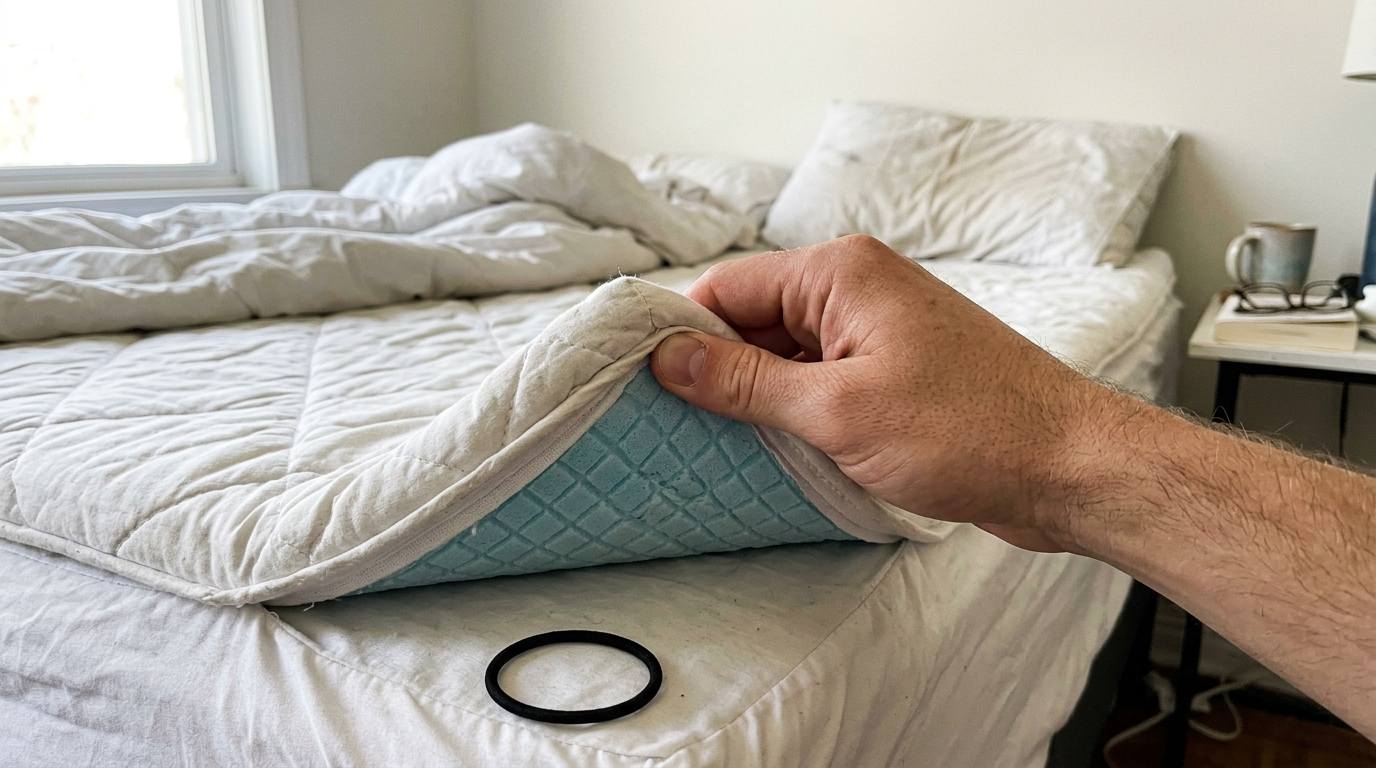
Phase-change gel layer between the cover and the foam. That's the whole mechanism.
What the cooling pad isn't doing
It's not making the room cooler. The bedroom thermostat showed an identical 68°F average across all 90 nights. What it's doing is removing the heat my body generates from sitting next to my body. The standard mattress effectively becomes a heated mattress over the course of the night because the memory foam traps every BTU you put out. The cooling pad has a phase-change gel layer that absorbs that heat for a few hours before saturating. By the time the gel is saturated, you're already in deep sleep and don't notice the rest of the night.
This is a small, mundane mechanism. It is not magic. It is also enough.
Who it doesn't work for
A friend I recommended the same model to didn't see any improvement. She is a 58-year-old in the middle of menopause-related night sweats, and the difference between a slightly-cooler mattress and her body's actual problem is far too large for the gel to bridge. She returned it and bought an active cooling pad with an actual chiller pump and a temperature setpoint, which is a different category of product (and a different price tier).
So: if your bedroom is reasonably cool and you just run a little warm at night, a $149 phase-change pad does measurable work. If you have a clinical heat problem, you probably need active cooling.
The takeaway
The single best 90 days of sleep I've measured in three years of tracking came on a $149 piece of quilted fabric I almost didn't bother trying. I will be sleeping on it tonight, and I will be replacing it when it wears out.
If you've been on the fence about this category, the bet is small. Most of the popular pads ship with a 90-day return window. Track yourself before, during, and after. If the numbers don't move, return it. If they do, you'll know.